Call us now :07313726069
 Send Inquiry
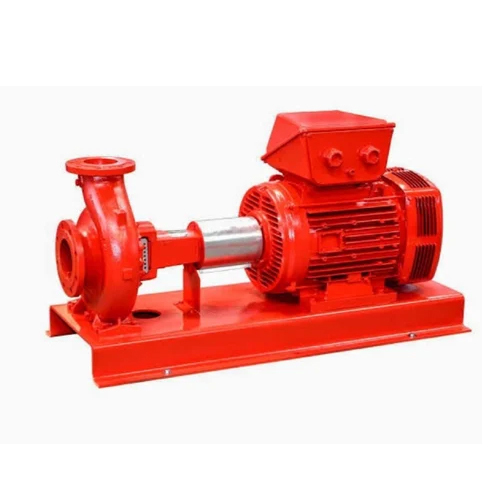
Horizontal Split Case Fire Pumps / HSC Pump


Horizontal Split Case Fire Pumps / HSC Pump Specification
- Voltage
- 380V / 415V / 440V, 3 Phase, 50/60 Hz
- Noise Level
- Below 85 dB(A)
- Flow Rate
- 18,925
- Discharge Pressure
- Up to 25 bar
- Control System
- Automatic / Manual / PLC Control
- Inlet/Outlet
- 100 mm / 80 mm (Other sizes available)
- Frequency
- 50 Hz / 60 Hz
- Fuel Tank Capacity
- As per engine and requirement
- Theory
- Centrifugal Pump
- Mounting Type
- Baseplate Mounted
- Head Size
- Up to 220 Meters
- Speed
- 1450 - 2900 rpm
- Max Suction
- 7 Meter
- Caliber
- Customizable as per requirement
- Working Temperature
- Up to 80C
- Features
- High efficiency, robust construction, easy maintenance, double suction impeller
- Material
- Cast Iron / Ductile Iron / Stainless Steel
- Structure
- Horizontal Split Case
- Power
- Up to 500 kW
- Standard
- NFPA 20 / UL / FM / IS 12469
- Fuel Type
- Electric / Diesel
- Pressure
- Up to 25 bar
- Usage
- Other
- Application
- Other
- Suction Type
- Horizontal
- Seals Type
- Mechanical Seal / Gland Packing
- Priming
- Flooded Suction
- Pump Type
- Horizontal Split Case
- Capacity
- Up to 4200 m3/h
- Shaft Material
- High grade stainless steel
- Coupling
- Flexible / Spacer coupling
- Impeller Type
- Double suction, dynamically balanced
- Direction of Discharge
- Up, left, right or vertically up
- Protection Class
- IP55 / IP54
- Installation Position
- Horizontal
- Pump Casing Pressure Test
- 1.5 times of working pressure
- Rotation
- Clockwise (CW) or Counter Clockwise (CCW)
- Bearing Type
- Heavy duty anti-friction
- Cooling Method
- Air / Water cooled (for diesel engine driven)
- Painting/Finish
- Anti-corrosive epoxy coating
About Horizontal Split Case Fire Pumps / HSC Pump
Horizontal Split Case Pumps are characterized by their double-suction, axially split casing design. This configuration is exceptionally well-suited for demanding high-flow and medium head applications, making them a preferred choice in numerous commercial and industrial settings. They are renowned for their:Rugged, enduring construction.
Exceptional ease of maintenance due to the split casing design. Consistently reliable and predictable performance
Model A: Electric Motor Driven HSC Pump
Direct coupling with Electric Motor Up to 5,000 GPM (USA) / 18,925 LPM Benefits High energy efficiency and reliability for general duty. Supports extensive fire suppression systems. Facilitates easy access to internal components Axially Split Casing. High hydraulic efficiency and low operating cost. (impeller, bearings) for minimal downtime during inspection or repair. Smooth, vibration-free operation.
Model B: Diesel Engine Driven HSC Pump
Industrial Diesel Engine with Right-Angle Drive Type Gear Drive Up to 5,000 GPM (USA) / 18,925 LPM Equipped with integrated fuel tank, battery, Provides critical operational autonomy. Maximum flow delivery regardless of electrical infra-structure status. Provides a robust, standalone backup fire protection system designed for long-term and a dedicated control system. reliable operation.
High-Performance Fire Pump Engineering
Our Horizontal Split Case Fire Pumps are designed for reliability and efficiency, equipped with features like dynamically balanced double suction impellers and heavy-duty bearings. Constructed from robust materials such as cast iron, ductile iron, or stainless steel, they withstand rigorous usage and corrosive environments. The pumps support customizable flow rates and pressures, making them suitable for a wide range of fire protection and water transfer settings.
Flexible Installation and Operation
These pumps accommodate various installation needs, with options for horizontal mounting, different discharge directions, and both clockwise and counter-clockwise rotation. With flexible or spacer coupling, the system ensures easy maintenance and servicing. Automated, manual, or PLC-based control systems are available, and the pumps can be powered by electric or diesel engines, with options for air or water cooling as needed for application requirements.
Commitment to Quality and Safety
Every pump undergoes stringent pressure testing at 1.5 times the working pressure and features anti-corrosive epoxy coatings for enhanced longevity. Certified to NFPA 20, UL, FM, and IS 12469 standards, our units ensure dependable operation in critical scenarios. Low noise levels and customizable configurations meet project-specific needs and international compliance.
FAQ's of Horizontal Split Case Fire Pumps / HSC Pump:
Q: How does the double suction, dynamically balanced impeller in HSC Fire Pumps improve performance?
A: The double suction, dynamically balanced impeller design ensures smooth flow with minimized hydraulic thrust, enhancing overall efficiency, reducing vibrations, and prolonging bearing and seal life. This allows the pump to achieve high flow rates and stable operation, which is vital in fire protection and water transfer applications.Q: What are the installation options for horizontal split case fire pumps?
A: These pumps can be installed horizontally on a baseplate, with discharge direction oriented up, left, right, or vertically up to suit piping layouts. They can also rotate clockwise or counter-clockwise, provide inlet/outlet sizes tailored per project, and support flooded suction for reliable operation.Q: When should you opt for mechanical seal versus gland packing in these pumps?
A: Mechanical seals are preferable for high-pressure, high-temperature, or low-maintenance situations, reducing leakage and wear. Gland packing is ideal where cost-effectiveness and simplicity are key, particularly in low to moderate pressure applications. Both seal types are available to match various project demands.Q: What processes are involved in pressure testing the pump casing?
A: Before dispatch, each pump casing is hydrostatically tested at 1.5 times its working pressure to ensure structural integrity and safety. This process verifies that the casing can handle extreme pressures without leakage or mechanical failure, complying with international fire safety standards.Q: How does the pump's construction ensure corrosion resistance?
A: Pump components are coated with an anti-corrosive epoxy finish, and critical parts such as the shaft use high-grade stainless steel to withstand harsh environments. Optional use of stainless or ductile iron further enhances durability, making the pump ideal for aggressive or corrosive water sources.Q: Where can these horizontal split case fire pumps be utilized?
A: They are suitable for industrial, commercial, and residential fire protection systems, as well as large-scale water transfer and utility supply networks. Their design supports operation in compliance-heavy environments and can be customized for both new installations and system upgrades.Q: What are the primary benefits of flexible/spacer coupling in these pumps?
A: Flexible and spacer couplings simplify pump and motor alignment, reduce vibration transmission, and facilitate easier maintenance-motors or pumps can be serviced without disturbing plumbing. This results in minimized downtime and increased system reliability.Tell us about your requirement

Price:
Quantity
Select Unit
- 50
- 100
- 200
- 250
- 500
- 1000+
Additional detail
Mobile number
Email

More Products in Fire Fighting Pumps Category

Jockey Pump
Minimum Order Quantity : 1 Kilograms
Voltage : 220/380V, 50/60Hz
Power : Other, 0.75 kW to 2.2 kW
Material : Cast Iron / Stainless Steel
Usage : Other
Fire Fighting V.T. Pump
Price 200000 INR / Piece
Minimum Order Quantity : 1 Piece
Voltage : 220440 Volt (v)
Power : Electric Horsepower (HP)
Material : Cast Iron
Usage : Water, Water Well, Automobile, Other

 Send Inquiry
Our Products

34, Delhi Road, Opposite BSNL telephone Exchange, Meerut - 250002, Uttar Pradesh, India

Mr Rajesh Maheswari
(CEO)
Mobile :07313726069
 Send Inquiry
 Send SMS
Developed and Managed by Infocom Network Private Limited.
